In the rapidly evolving landscape of artificial intelligence, AI agents are becoming integral to daily operations, from customer service to internal workflows. As these agents take on more complex tasks, their performance directly impacts user experience and business outcomes. However, the silent failures, user frustrations, and subtle inefficiencies often go unnoticed, creating a critical gap in understanding their true impact. This is where the strategic importance of sophisticated product analytics for AI agents, exemplified by , comes into sharp focus. For environments like , where human and AI agents collaborate in a shared virtual workspace, ensuring the optimal function of every AI component is paramount to seamless operation and productive human-AI teaming.
Signal 03
Apple Introduces M6 and M5 Ultra: A Monumental Leap in Performance and On-Device AI Compute
In the rapidly evolving landscape of artificial intelligence, AI agents are becoming integral to daily operations, from customer service to internal workflows. As these agents take on more complex tasks, their performance directly impacts user experience and business outcomes. However, the silent failures, user frustrations, and subtle inefficiencies often go unnoticed, creating a critical gap in understanding their true impact. This is where the strategic importance of sophisticated product analytics for AI agents, exemplified by , comes into sharp focus. For environments like , where human and AI agents collaborate in a shared virtual workspace, ensuring the optimal function of every AI component is paramount to seamless operation and productive human-AI teaming.
Signal 03
Apple Introduces M6 and M5 Ultra: A Monumental Leap in Performance and On-Device AI Compute
The Imperative of Understanding AI Agent Performance
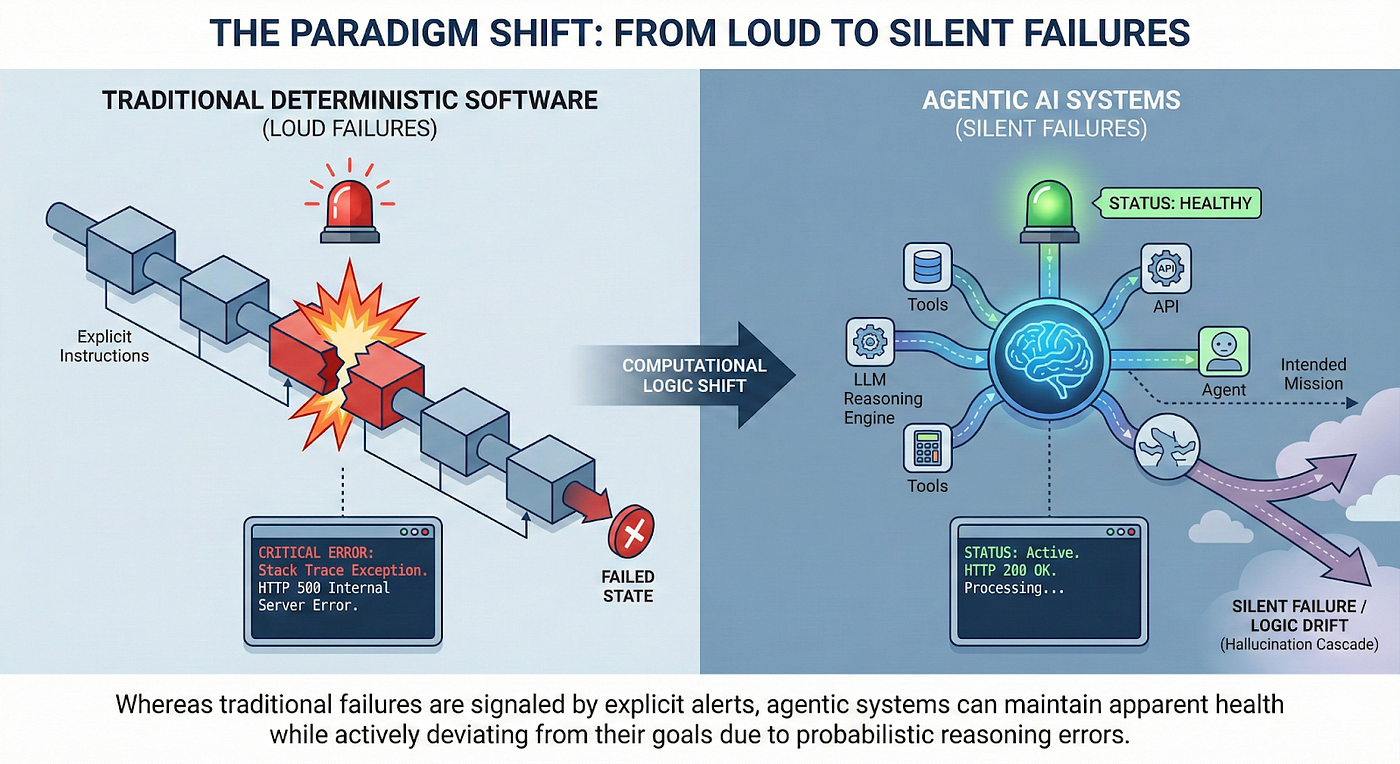
The deployment of AI agents marks a significant leap in automation and efficiency, yet it introduces a new set of challenges. Unlike traditional software, the behavior of conversational AI agents can be nuanced, with "silent failures" occurring when an agent doesn't explicitly crash but fails to meet user intent or provide a satisfactory response (Source 1, 2). These subtle breakdowns can accumulate, leading to significant user frustration, missed feature requests, and even policy violations that remain undetected without specialized tools (Source 1).
Consider an AI agent designed to assist with customer inquiries. If it frequently misinterprets user intent or provides unhelpful information, users will quickly become disengaged, potentially leading to churn (Source 1). Such issues are often buried within vast logs of conversation data, making manual identification nearly impossible. The absence of clear, actionable insights into agent performance means that development teams operate in the dark, unable to pinpoint what broke, why users are leaving, or what improvements are truly needed (Source 1). This lack of visibility can result in costly failures, wasted development cycles, and a fundamental disconnect between the AI agent's intended purpose and its real-world impact (Source 1). Therefore, understanding every interaction, identifying patterns of failure, and proactively addressing them is not merely an operational luxury but a strategic necessity for any organization leveraging AI agents.
What is Agnost AI? A Deep Dive into Conversational Analytics
Agnost AI emerges as a critical solution to these challenges, positioning itself as a product analytics platform specifically designed for conversational AI agents (Source 1, 2, 7, 8). Backed by Y Combinator (YC S26), a testament to its innovative approach, Agnost AI provides the tools necessary to gain deep insights into agent performance in production environments (Source 1, 2, 3). At its core, Agnost AI reads every conversation an AI agent has with its users (Source 2, 3). This comprehensive analysis allows it to identify where the agent is silently failing, uncovering issues that would otherwise go unnoticed (Source 2, 3).
The platform goes beyond mere error detection; it transforms raw conversation data into actionable intelligence. By analyzing these production traces, Agnost AI helps teams understand user demand, catch broken behavior, debug the root causes, and continuously improve their AI agents (Source 6). Key features include the ability to auto-cluster conversations, which helps in identifying recurring themes of user frustration or common feature requests across thousands of interactions (Source 1). It also offers real-time production evaluations, sentiment tracking, and user profiling, providing a holistic view of user experience and agent effectiveness (Source 8). This detailed understanding allows organizations to not only fix what matters but also to prevent costly failures before they escalate (Source 1). Agnost AI is not just about identifying problems; it's about leveraging the very data of agent interactions to refine and specialize the AI models themselves, leading to agents that perform better, respond faster, and operate more cost-effectively (Source 3).
How Agnost AI Empowers AI Agents and Human Teams
The strategic value of Agnost AI lies in its ability to empower both the AI agents themselves and the human teams responsible for their development and deployment. By providing granular product analytics for conversational agents, Agnost AI enables teams to "catch silent failures fast" (Source 1). This proactive approach means that developers can see what broke before users even have a chance to leave, significantly reducing churn and improving user satisfaction (Source 1). The platform's capacity to find user frustration, feature requests, and policy violations across every conversation means that human teams gain an unprecedented level of insight into their agents' real-world performance (Source 1).
The process is designed for efficiency and impact. Teams connect their AI agent to Agnost AI, which then begins to understand production interactions (Source 6). This understanding is not superficial; it delves into the nuances of user intent and agent responses, identifying where agents break expected behavior (Source 6). With this data, human teams can then "take action" to improve their agents continuously (Source 6). For instance, the platform can turn production traces into custom models that are specialized for a company's exact workload (Source 2, 3). This specialization leads to AI agents that perform better, respond faster, and cost less than relying solely on frontier models (Source 3). An official SDK for Langchain agents further streamlines this integration, allowing developers to see all their agent insights with just one line of code change (Source 5). Ultimately, Agnost AI helps human teams "ship what users want" by providing the evidence-based insights needed to refine and optimize AI agent functionality, ensuring that development efforts are focused on improvements that genuinely impact user experience and business goals (Source 1).
The Future of AI Offices: Integrating Analytics for Human-AI Collaboration
The concept of the AI office represents a significant paradigm shift, where human and AI agents collaborate seamlessly within a shared digital workspace. Platforms like Nonilion exemplify this future, facilitating virtual office collaboration, asynchronous execution, and workflow automation where AI agents play a pivotal role in augmenting human capabilities and streamlining operations. In such an integrated environment, the performance of every AI agent is not just a technical detail but a foundational element for the entire team's productivity and the overall success of the AI office.
This is precisely where the strategic importance of analytical tools like Agnost AI becomes indispensable for the future of human-AI collaboration. Imagine an AI agent within Nonilion responsible for summarizing meeting notes, coordinating project tasks, or retrieving information for a human colleague. If this agent silently fails to accurately capture key decisions, misinterprets a task request, or provides outdated information, the ripple effect can undermine team coordination, disrupt workflows, and erode trust in the AI's capabilities. Without a robust system like Agnost AI, detecting these subtle yet critical failures in a high-volume, collaborative environment would be akin to searching for a needle in a haystack.
Agnost AI provides the necessary visibility into these interactions, ensuring that the AI agents operating within the Nonilion environment are not just present but are actively contributing effectively and reliably. By continuously monitoring conversational agents for silent failures, user frustration, and even policy violations, Agnost AI enables human teams to proactively identify and rectify issues that could otherwise hinder collaboration (Source 1). This continuous feedback loop is vital for maintaining the integrity of workflow automation and ensuring that AI agents truly augment, rather than impede, human productivity. The ability to turn production traces into specialized models means that AI agents within an AI office can be perpetually optimized, becoming more intelligent, faster, and more cost-efficient over time (Source 3). For Nonilion, this translates into a more resilient, responsive, and productive shared workspace where human and AI agents can truly thrive together, driving innovation and efficiency through informed, data-driven improvement cycles.
Frequently Asked Questions about Agnost AI
What types of issues does Agnost AI identify in conversational agents?
Agnost AI is designed to identify a comprehensive range of issues within conversational agents. This includes "silent failures," where an agent doesn't explicitly break but fails to meet user intent, as well as instances of user frustration, unaddressed feature requests, and policy violations across every conversation (Source 1, 2). It also helps teams understand where agents break expected behavior and the underlying causes (Source 6).
How does Agnost AI improve the performance and efficiency of AI agents?
Agnost AI improves agent performance and efficiency by leveraging real production interactions. It reads every conversation, identifies failures, and then uses that same data to train custom models specialized for a company's exact workload (Source 2, 3). This specialization leads to agents that perform better, respond faster, and cost less than those running on generic frontier models (Source 3). Furthermore, by providing insights into user demand and broken behavior, it enables continuous improvement and helps teams ship what users truly want (Source 1, 6).
Is Agnost AI suitable for all types of conversational agents?
While the sources primarily refer to "conversational agents" and "AI agents" generally, Agnost AI is presented as a product analytics platform for teams building chat and voice AI agents (Source 7). It supports understanding and improving AI agents using real production interactions across various agent frameworks, voice agents, and custom applications (Source 6). An official SDK for Langchain agents is also available, indicating compatibility with popular AI development frameworks (Source 5).
Key Takeaways: Driving Continuous Improvement in the AI-Powered World
The era of AI agents is here, and with it comes the critical need for a deeper understanding of their operational dynamics. Agnost AI stands out as a pivotal tool in this new landscape, offering product analytics for conversational agents that illuminate the unseen lives of these intelligent systems. By uncovering silent failures, user frustrations, and opportunities for enhancement, Agnost AI empowers organizations to move beyond reactive debugging to proactive, data-driven optimization.
The ability to turn production traces into specialized models represents a significant leap, allowing AI agents to continuously learn and adapt, becoming more efficient, responsive, and cost-effective over time (Source 3). This continuous improvement cycle is not just a technical advantage; it's a strategic imperative for maintaining user trust and driving innovation in an AI-first world. For collaborative environments like this platform, where human and AI agents work in tandem, tools like Agnost AI are essential for ensuring that every AI component contributes positively to workflow automation, team coordination, and the overall promise of a truly integrated human-AI workspace. The future of AI offices hinges on the ability to understand, measure, and continuously refine the performance of our AI agents, making platforms like Agnost AI indispensable for building robust, reliable, and highly effective AI-powered solutions.
This trend matters to Nonilion because it points to a bigger change: teams are moving from simple calls toward persistent, AI-supported collaboration spaces. Nonilion can bridge live presence, meeting context, avatars, and follow-up work so the trend becomes a usable workflow instead of a headline.
Shareable Extracts
The trend is not just "Agnost AI: Unmasking the Silent Failures of Conversational Agents in the AI Office" - it is a signal that team coordination is becoming the next competitive edge.
Hot take: the teams that win from this shift will not be the ones with more meetings; they will be the ones with clearer shared context after every meeting.
If agnost ai: unmasking the silent failures of conversational agents in the ai office keeps moving this fast, remote teams need a workspace where conversation, presence, and follow-up stay connected.
As these agents take on more complex tasks, their performance directly impacts user experience and business outcomes.
However, the silent failures, user frustrations, and subtle inefficiencies often go unnoticed, creating a critical gap in understanding their true impact.
Social Hooks
Everyone is talking about Agnost AI: Unmasking the Silent Failures of Conversational Agents in the AI Office. The overlooked part is what happens to team workflows after the headline fades.
The uncomfortable question behind Agnost AI: Unmasking the Silent Failures of Conversational Agents in the AI Office: are teams adapting their collaboration systems fast enough?
This is not a meeting trend. It is a coordination trend, and products like Nonilion sit right in the middle of that shift.
Sources and Author
Sources
Agnost AI | Product analytics for conversational agents
agnost.ai
This article on Agnost AI was generated by the Nonilion AI blog workflow using web research inputs and AI-assisted synthesis.
Questions / Answers
Frequently asked
01
How does Nonilion help with Agnost AI?
For Agnost AI, Nonilion can help teams coordinate planning, meetings, and follow-ups in one collaborative workflow. It supports clearer decision tracking, async collaboration, and practical execution across distributed teams.
The Imperative of Understanding AI Agent Performance
The deployment of AI agents marks a significant leap in automation and efficiency, yet it introduces a new set of challenges. Unlike traditional software, the behavior of conversational AI agents can be nuanced, with "silent failures" occurring when an agent doesn't explicitly crash but fails to meet user intent or provide a satisfactory response (Source 1, 2). These subtle breakdowns can accumulate, leading to significant user frustration, missed feature requests, and even policy violations that remain undetected without specialized tools (Source 1).
Consider an AI agent designed to assist with customer inquiries. If it frequently misinterprets user intent or provides unhelpful information, users will quickly become disengaged, potentially leading to churn (Source 1). Such issues are often buried within vast logs of conversation data, making manual identification nearly impossible. The absence of clear, actionable insights into agent performance means that development teams operate in the dark, unable to pinpoint what broke, why users are leaving, or what improvements are truly needed (Source 1). This lack of visibility can result in costly failures, wasted development cycles, and a fundamental disconnect between the AI agent's intended purpose and its real-world impact (Source 1). Therefore, understanding every interaction, identifying patterns of failure, and proactively addressing them is not merely an operational luxury but a strategic necessity for any organization leveraging AI agents.
What is Agnost AI? A Deep Dive into Conversational Analytics
Agnost AI emerges as a critical solution to these challenges, positioning itself as a product analytics platform specifically designed for conversational AI agents (Source 1, 2, 7, 8). Backed by Y Combinator (YC S26), a testament to its innovative approach, Agnost AI provides the tools necessary to gain deep insights into agent performance in production environments (Source 1, 2, 3). At its core, Agnost AI reads every conversation an AI agent has with its users (Source 2, 3). This comprehensive analysis allows it to identify where the agent is silently failing, uncovering issues that would otherwise go unnoticed (Source 2, 3).
The platform goes beyond mere error detection; it transforms raw conversation data into actionable intelligence. By analyzing these production traces, Agnost AI helps teams understand user demand, catch broken behavior, debug the root causes, and continuously improve their AI agents (Source 6). Key features include the ability to auto-cluster conversations, which helps in identifying recurring themes of user frustration or common feature requests across thousands of interactions (Source 1). It also offers real-time production evaluations, sentiment tracking, and user profiling, providing a holistic view of user experience and agent effectiveness (Source 8). This detailed understanding allows organizations to not only fix what matters but also to prevent costly failures before they escalate (Source 1). Agnost AI is not just about identifying problems; it's about leveraging the very data of agent interactions to refine and specialize the AI models themselves, leading to agents that perform better, respond faster, and operate more cost-effectively (Source 3).
How Agnost AI Empowers AI Agents and Human Teams
The strategic value of Agnost AI lies in its ability to empower both the AI agents themselves and the human teams responsible for their development and deployment. By providing granular product analytics for conversational agents, Agnost AI enables teams to "catch silent failures fast" (Source 1). This proactive approach means that developers can see what broke before users even have a chance to leave, significantly reducing churn and improving user satisfaction (Source 1). The platform's capacity to find user frustration, feature requests, and policy violations across every conversation means that human teams gain an unprecedented level of insight into their agents' real-world performance (Source 1).
The process is designed for efficiency and impact. Teams connect their AI agent to Agnost AI, which then begins to understand production interactions (Source 6). This understanding is not superficial; it delves into the nuances of user intent and agent responses, identifying where agents break expected behavior (Source 6). With this data, human teams can then "take action" to improve their agents continuously (Source 6). For instance, the platform can turn production traces into custom models that are specialized for a company's exact workload (Source 2, 3). This specialization leads to AI agents that perform better, respond faster, and cost less than relying solely on frontier models (Source 3). An official SDK for Langchain agents further streamlines this integration, allowing developers to see all their agent insights with just one line of code change (Source 5). Ultimately, Agnost AI helps human teams "ship what users want" by providing the evidence-based insights needed to refine and optimize AI agent functionality, ensuring that development efforts are focused on improvements that genuinely impact user experience and business goals (Source 1).
The Future of AI Offices: Integrating Analytics for Human-AI Collaboration
The concept of the AI office represents a significant paradigm shift, where human and AI agents collaborate seamlessly within a shared digital workspace. Platforms like Nonilion exemplify this future, facilitating virtual office collaboration, asynchronous execution, and workflow automation where AI agents play a pivotal role in augmenting human capabilities and streamlining operations. In such an integrated environment, the performance of every AI agent is not just a technical detail but a foundational element for the entire team's productivity and the overall success of the AI office.
This is precisely where the strategic importance of analytical tools like Agnost AI becomes indispensable for the future of human-AI collaboration. Imagine an AI agent within Nonilion responsible for summarizing meeting notes, coordinating project tasks, or retrieving information for a human colleague. If this agent silently fails to accurately capture key decisions, misinterprets a task request, or provides outdated information, the ripple effect can undermine team coordination, disrupt workflows, and erode trust in the AI's capabilities. Without a robust system like Agnost AI, detecting these subtle yet critical failures in a high-volume, collaborative environment would be akin to searching for a needle in a haystack.
Agnost AI provides the necessary visibility into these interactions, ensuring that the AI agents operating within the Nonilion environment are not just present but are actively contributing effectively and reliably. By continuously monitoring conversational agents for silent failures, user frustration, and even policy violations, Agnost AI enables human teams to proactively identify and rectify issues that could otherwise hinder collaboration (Source 1). This continuous feedback loop is vital for maintaining the integrity of workflow automation and ensuring that AI agents truly augment, rather than impede, human productivity. The ability to turn production traces into specialized models means that AI agents within an AI office can be perpetually optimized, becoming more intelligent, faster, and more cost-efficient over time (Source 3). For Nonilion, this translates into a more resilient, responsive, and productive shared workspace where human and AI agents can truly thrive together, driving innovation and efficiency through informed, data-driven improvement cycles.
Frequently Asked Questions about Agnost AI
What types of issues does Agnost AI identify in conversational agents?
Agnost AI is designed to identify a comprehensive range of issues within conversational agents. This includes "silent failures," where an agent doesn't explicitly break but fails to meet user intent, as well as instances of user frustration, unaddressed feature requests, and policy violations across every conversation (Source 1, 2). It also helps teams understand where agents break expected behavior and the underlying causes (Source 6).
How does Agnost AI improve the performance and efficiency of AI agents?
Agnost AI improves agent performance and efficiency by leveraging real production interactions. It reads every conversation, identifies failures, and then uses that same data to train custom models specialized for a company's exact workload (Source 2, 3). This specialization leads to agents that perform better, respond faster, and cost less than those running on generic frontier models (Source 3). Furthermore, by providing insights into user demand and broken behavior, it enables continuous improvement and helps teams ship what users truly want (Source 1, 6).
Is Agnost AI suitable for all types of conversational agents?
While the sources primarily refer to "conversational agents" and "AI agents" generally, Agnost AI is presented as a product analytics platform for teams building chat and voice AI agents (Source 7). It supports understanding and improving AI agents using real production interactions across various agent frameworks, voice agents, and custom applications (Source 6). An official SDK for Langchain agents is also available, indicating compatibility with popular AI development frameworks (Source 5).
Key Takeaways: Driving Continuous Improvement in the AI-Powered World
The era of AI agents is here, and with it comes the critical need for a deeper understanding of their operational dynamics. Agnost AI stands out as a pivotal tool in this new landscape, offering product analytics for conversational agents that illuminate the unseen lives of these intelligent systems. By uncovering silent failures, user frustrations, and opportunities for enhancement, Agnost AI empowers organizations to move beyond reactive debugging to proactive, data-driven optimization.
The ability to turn production traces into specialized models represents a significant leap, allowing AI agents to continuously learn and adapt, becoming more efficient, responsive, and cost-effective over time (Source 3). This continuous improvement cycle is not just a technical advantage; it's a strategic imperative for maintaining user trust and driving innovation in an AI-first world. For collaborative environments like this platform, where human and AI agents work in tandem, tools like Agnost AI are essential for ensuring that every AI component contributes positively to workflow automation, team coordination, and the overall promise of a truly integrated human-AI workspace. The future of AI offices hinges on the ability to understand, measure, and continuously refine the performance of our AI agents, making platforms like Agnost AI indispensable for building robust, reliable, and highly effective AI-powered solutions.
This trend matters to Nonilion because it points to a bigger change: teams are moving from simple calls toward persistent, AI-supported collaboration spaces. Nonilion can bridge live presence, meeting context, avatars, and follow-up work so the trend becomes a usable workflow instead of a headline.
Shareable Extracts
The trend is not just "Agnost AI: Unmasking the Silent Failures of Conversational Agents in the AI Office" - it is a signal that team coordination is becoming the next competitive edge.
Hot take: the teams that win from this shift will not be the ones with more meetings; they will be the ones with clearer shared context after every meeting.
If agnost ai: unmasking the silent failures of conversational agents in the ai office keeps moving this fast, remote teams need a workspace where conversation, presence, and follow-up stay connected.
As these agents take on more complex tasks, their performance directly impacts user experience and business outcomes.
However, the silent failures, user frustrations, and subtle inefficiencies often go unnoticed, creating a critical gap in understanding their true impact.
Social Hooks
Everyone is talking about Agnost AI: Unmasking the Silent Failures of Conversational Agents in the AI Office. The overlooked part is what happens to team workflows after the headline fades.
The uncomfortable question behind Agnost AI: Unmasking the Silent Failures of Conversational Agents in the AI Office: are teams adapting their collaboration systems fast enough?
This is not a meeting trend. It is a coordination trend, and products like Nonilion sit right in the middle of that shift.
Sources and Author
Sources
Agnost AI | Product analytics for conversational agents
agnost.ai
This article on Agnost AI was generated by the Nonilion AI blog workflow using web research inputs and AI-assisted synthesis.
Questions / Answers
Frequently asked
01
How does Nonilion help with Agnost AI?
For Agnost AI, Nonilion can help teams coordinate planning, meetings, and follow-ups in one collaborative workflow. It supports clearer decision tracking, async collaboration, and practical execution across distributed teams.