Discover how Andrej Karpathy's strategic principles optimize human-AI collaboration. Learn to design, refine, and manage AI agents for peak performance in the Nonilion AI Office, driving efficiency and innovation.
N
Nonilion Editorial
Jun 10, 2026 · 7 min read
Blog Outline: Beyond Code: How Karpathy's Principles Can Elevate Human-AI Collaboration in the Nonilion AI Office
Target Audience: Business leaders, team managers, AI strategists, and professionals interested in optimizing human-AI collaboration and designing efficient AI-powered workplaces.
SEO Keywords: Andrej Karpathy skills, AI agent optimization, human-AI collaboration, AI office, Nonilion, prompt engineering, workflow automation, AI strategy, future of work, iterative AI development.
FAQs
How does Nonilion help with andrej-karpathy-skills?
For andrej-karpathy-skills, Nonilion can help teams coordinate planning, meetings, and follow-ups in one collaborative workflow. It supports clearer decision tracking, async collaboration, and practical execution across distributed teams.
How do Andrej Karpathy's coding principles translate into practical strategies for managing AI agents in a business environment?
Karpathy's principles, like 'Think Before Executing' and 'Iterative Refinement,' shift from coding to strategic AI agent management. They guide defining clear intent for AI tasks, designing focused agents, and systematically refining their performance through precise feedback, optimizing human-AI collaboration.
Which of Karpathy's reframed principles offers the most immediate impact for improving human-AI collaboration in an AI office?
'Think Before Executing' is arguably the most critical. By meticulously defining the problem, desired outcome, constraints, and inputs *before* delegating to an AI agent, teams can significantly reduce misinterpretations and rework, ensuring AI outputs are immediately actionable and aligned with human intent.
How can Karpathy's principles help organizations ensure AI agents produce high-quality, relevant outputs and avoid 'garbage in, garbage out'?
The principle of 'Think Before Executing' directly addresses this by emphasizing precise prompt engineering and clear objective setting. Additionally, 'Clarity & Efficiency in AI Design' ensures agents have well-defined, single purposes, making their outputs more predictable and focused, while 'Iterative Refinement' allows for continuous improvement based on specific feedback.
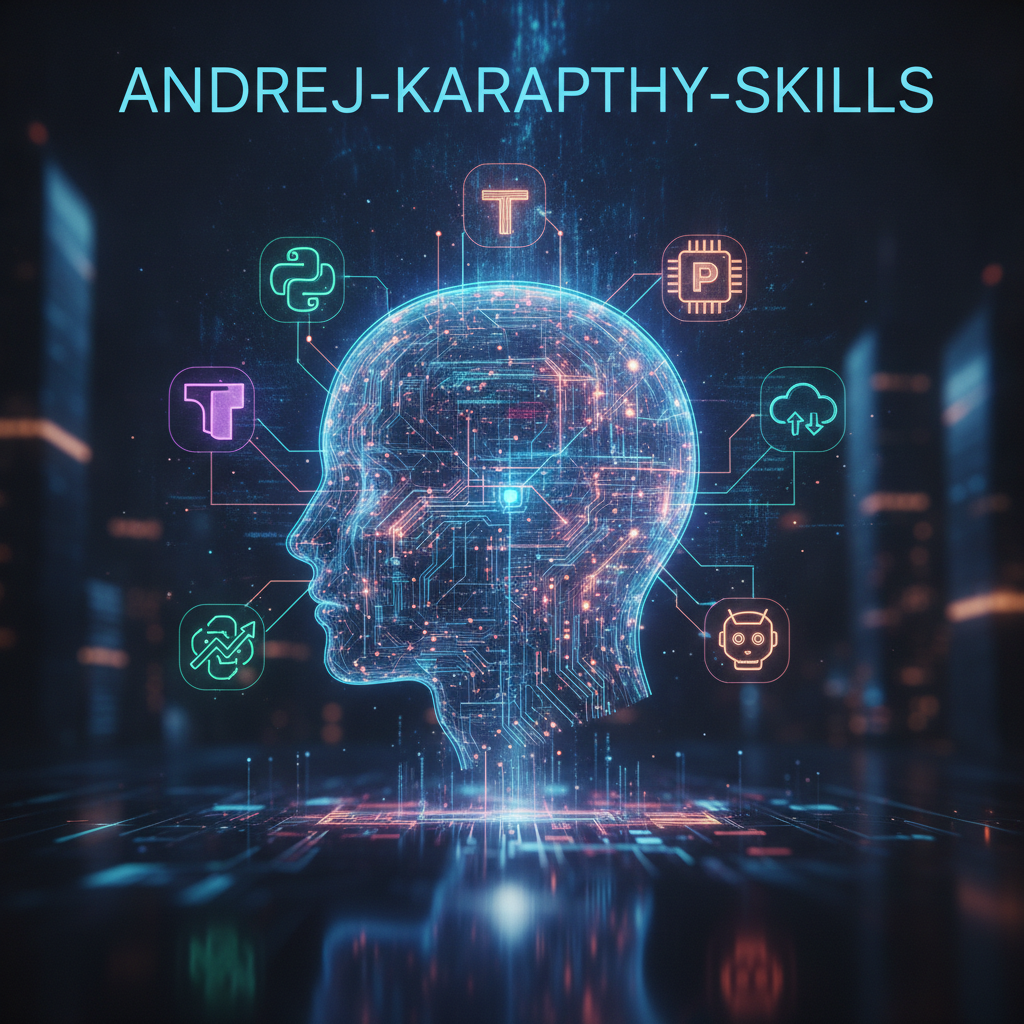
AI generated visual for Blog Outline: Beyond Code: How Karpathy's Principles Can Elevate Human-AI Collaboration in the [Nonilion](https://nonilion.com/) AI Office
I. Introduction: The Strategic Imperative of AI Agent Skills
Andrej Karpathy's influence on AI development is widely recognized, often cited for his pragmatic approach to building robust deep learning systems. While many interpret his insights through the lens of coding agents, we suggest their potential extends to a broader, strategic application: optimizing any AI agent for effective human-AI collaboration.
This article aims to move beyond the technical specifics of LLM code generation to explore broader principles that can govern reliable AI performance and interaction. Nonilion, committed to fostering AI offices where humans and AI agents can seamlessly co-exist and collaborate, aligns with this vision. We will explore how Karpathy's often-cited principles can serve as a framework for designing, deploying, and refining AI agents within such a shared workspace, potentially enhancing how teams operate and achieve outcomes.
This article aims to show how Karpathy’s strategic mindset can be applied to empower human teams to interact more effectively with AI agents, potentially driving clarity, efficiency, and measurable results in AI-powered workflows.
II. Decoding Karpathy's Principles for the AI Office: What They Mean for Human-AI Collaboration
Karpathy's "skills" or principles (often distilled from his "State of GPT" talks) offer a valuable perspective for building reliable AI. We'll reframe these from a coding perspective to a strategic, AI agent management perspective.
A. "Think Before Executing": Defining Intent for AI Agents
Original Principle (Coding): Think before writing code, understand the problem deeply.
AI Office Interpretation (What): For AI agents, this means meticulously defining the problem, desired outcome, constraints, and necessary inputs before delegating any task. It's about crafting precise prompts and clear objectives.
Why it Matters: This principle helps prevent "garbage in, garbage out." It aims to ensure AI agents are aligned with human intent, potentially reducing rework and misinterpretations.
Nonilion Relevance: In a Nonilion virtual office, this principle is critical for tasks like drafting a complex report or analyzing market data. A human team member must "think before executing" by providing a detailed prompt to an AI agent, specifying tone, format, key data points, and target audience. This can help make the agent's output more immediately actionable for async execution, potentially minimizing follow-up and enhancing productivity within the shared workspace.
B. "Clarity & Efficiency in AI Design": Simplicity First for Agent Roles
Original Principle (Coding): Strive for simple, elegant solutions; avoid unnecessary complexity.
AI Office Interpretation (How): This applies to designing AI agents with single, well-defined purposes. Craft concise, unambiguous prompts. Avoid overloading an agent with too many responsibilities or vague instructions.
Why it Matters: Simple, focused agents are often more predictable, easier to understand, and more efficient. Complex, multi-role agents can sometimes lead to confusion and suboptimal performance, potentially hindering seamless human-AI co-working.
Practical Example: Instead of one AI agent tasked with "marketing," consider creating separate agents for "social media post generation," "email campaign drafting," and "SEO keyword research." This clarity can foster better human-AI collaboration and make agent integration into workflows more straightforward.
C. "Iterative Refinement for AI Agent Performance": Surgical Changes Over Broad Overhauls
Original Principle (Coding): Make small, targeted changes and test their impact.
AI Office Interpretation (How): When an AI agent's output isn't perfect, identify the specific area of potential failure (e.g., tone, accuracy, missing information). Make precise adjustments to the prompt, context, or agent configuration, rather than rewriting everything from scratch.
Why it Matters: This approach allows for systematic improvement, faster iteration cycles, and a deeper understanding of an agent's limitations and strengths. It can be crucial for continuous improvement in dynamic work environments.
Practical Example: An AI agent drafts a meeting summary, but the action items are unclear. Instead of a full rewrite, a "surgical change" might involve adding a prompt instruction: "Ensure all action items are bulleted, assigned, and include a deadline." This targeted feedback mechanism can enhance the agent's utility over time.
D. "Outcome-Oriented AI Collaboration": Goal-Driven Execution for Measurable Impact
Original Principle (Coding): Define clear success criteria and measure against them.
AI Office Interpretation (When/Where): For every task delegated to an AI agent, establish clear, measurable success criteria before execution. Evaluate the agent's output against these specific goals, not just against a general sense of "completeness."
Why it Matters: This shifts the focus from simply having an AI agent to aiming to ensure it contributes meaningfully to business objectives. It provides a framework for continuous improvement and ROI consideration, helping ensure AI efforts are tied to tangible results.
Practical Example: An AI agent is tasked with generating five unique blog post ideas. Success criteria might include "ideas must be relevant to target audience," "must include a clear hook," and "must differentiate from existing content." The human team can then evaluate against these specific goals, aiming to ensure the AI agent's output meets strategic needs.
III. The this platform AI Office: Where Karpathy's Principles Can Offer Strategic Advantage
Building the Intelligent Workspace: How Karpathy's Principles Can Inform this platform's Human + AI Ecosystem
The future of work may benefit from more than just AI tools; it can require an intelligent environment where human and AI capabilities amplify each other. This is where the strategic application of Karpathy's principles can be particularly valuable.
At this platform, these principles are considered foundational to how teams coordinate, how workflows are automated, and how human intelligence is augmented by AI.
Empowering Human Teams: By understanding "Think Before Executing," humans can develop skills as AI orchestrators, not just users. They can define the strategic direction, and AI agents can handle execution, potentially freeing human capacity for higher-level thinking and decision-making within the this platform virtual office.
Optimizing Workflow Automation: "Clarity & Efficiency in AI Design" can help ensure that this platform's AI agents are designed for specific, high-value tasks, integrating smoothly into existing workflows with the aim of minimizing new bottlenecks. This can be crucial for seamless team coordination and asynchronous work, potentially enabling teams to enhance their output efficiently.
Continuous Improvement through Collaboration: "Iterative Refinement for AI Agent Performance" can facilitate human teams in providing precise feedback to AI agents, aiming to refine their performance. This iterative loop is central to this platform's philosophy of human + AI co-working, where agents can learn and adapt based on direct human input, with the goal of continuously improving their utility and accuracy.
Driving Business Outcomes: this platform aims to ensure that every AI-powered initiative is tied to clear, measurable business objectives, with the aim of transforming AI into a significant driver of productivity and innovation. This focus on measurable impact can help validate the investment in AI and guide future development.
this platform isn't just a platform; it's an operational philosophy. It aims to leverage these principles to foster an environment where AI agents can function as intelligent collaborators, designed and refined with strategic intent to enhance aspects of the modern office.
IV. Conclusion: Mastering the Art of Human-AI Collaboration
Andrej Karpathy's pragmatic approach to AI development offers a powerful framework for navigating the complexities of the AI office. By reframing his principles – "Think Before Executing," "Clarity & Efficiency in AI Design," "Iterative Refinement for AI Agent Performance," and "Outcome-Oriented AI Collaboration" – we can offer a strategic framework for maximizing the potential of AI agents.
These are not just technical tips; they represent a strategic mindset that can be essential for anyone building, managing, or working within an AI-augmented environment. They can empower humans to lead, design, and refine AI interactions for enhanced outcomes, fostering a future where human ingenuity is amplified by intelligent automation.
In the this platform AI office, these principles are applied as a practical foundation for fostering intelligent human-AI collaboration, with the goal of enabling enhanced efficiency, innovation, and strategic advantage.
Explore how this platform is exploring approaches to the future of work by empowering human teams to strategically collaborate with AI agents in a shared, intelligent workspace.
This article on andrej-karpathy-skills was generated by the Nonilion AI blog workflow using web research inputs and AI-assisted synthesis.
Beyond just efficiency, how do Karpathy's principles contribute to achieving measurable business outcomes through AI collaboration?
The 'Outcome-Oriented AI Collaboration' principle is key. It mandates establishing clear, measurable success criteria for every AI task *before* execution. This ensures AI efforts are directly tied to tangible business objectives, providing a framework for continuous improvement and validating ROI.
How does Nonilion specifically help organizations implement Karpathy's principles for better human-AI collaboration?
Nonilion provides a virtual office environment designed to integrate AI agents seamlessly into workflows. For instance, it facilitates 'Think Before Executing' by enabling structured prompt inputs for AI tasks, supports 'Clarity & Efficiency' through configurable, purpose-built AI agents, and incorporates 'Iterative Refinement' by allowing human teams to provide direct, specific feedback to agents within the platform to continuously improve their performance on tasks like drafting reports or analyzing data.


 AI Office](https://dyfemgew43vetjj3.public.blob.vercel-storage.com/articles/andrej-karpathy-skills-1781133607866-generated-CNkHCGhSRSuKzG7onad7oOdx8sYe8F.png)