Apple continues to be a driving force in technological innovation, and while specific details about future chips like M6 and M5 Ultra are not yet known, it's compelling to consider the potential advancements they could bring in performance and AI compute capabilities. Such developments would signify not just an upgrade in hardware, but a potential pivotal moment for the future of intelligent features and on-device AI, profoundly impacting how we perceive and interact with digital workspaces. As increasingly powerful chips enable more sophisticated AI agents and local processing, the stage could be set for platforms like to further redefine human + AI collaboration in a shared virtual office.
Signal 03
Agnost AI: Unmasking the Silent Failures of Conversational Agents in the AI Office
Apple continues to be a driving force in technological innovation, and while specific details about future chips like M6 and M5 Ultra are not yet known, it's compelling to consider the potential advancements they could bring in performance and AI compute capabilities. Such developments would signify not just an upgrade in hardware, but a potential pivotal moment for the future of intelligent features and on-device AI, profoundly impacting how we perceive and interact with digital workspaces. As increasingly powerful chips enable more sophisticated AI agents and local processing, the stage could be set for platforms like to further redefine human + AI collaboration in a shared virtual office.
Signal 03
Agnost AI: Unmasking the Silent Failures of Conversational Agents in the AI Office
The Potential of a Future M5 Era: Redefining AI Performance on Apple Silicon
The introduction of a future M5 chip could herald a new chapter in Apple Silicon, one centered on accelerating the kinds of workloads that increasingly define modern computing. Rather than treating AI as a separate feature layer, Apple's established approach has been to integrate machine intelligence into the core of the chip architecture itself. This approach could allow everyday tasks—searching, summarizing, generating, organizing, and predicting—to happen with less latency, lower power draw, and greater privacy than cloud-only alternatives.
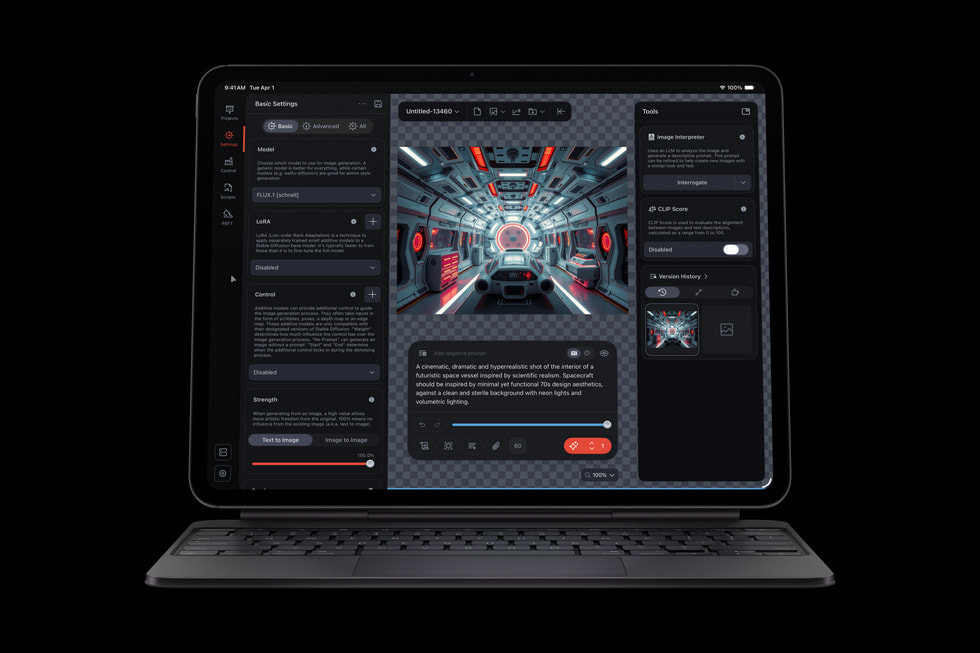
For users, the practical result could be a system that feels more immediate and more responsive. Applications might analyze audio, images, text, and workflows locally, potentially reducing the wait time that often interrupts creative or analytical work. For teams, this could mean AI support woven into collaboration without requiring every prompt or file to leave the device. In environments where confidentiality and speed both matter, such a shift would be especially important.
If a future M5 chip were to help establish a stronger baseline for on-device intelligence, an M6 chip could be positioned to expand that baseline into a more ambitious class of computing. The focus might not just be raw speed, but the ability to sustain complex AI operations across longer sessions and heavier workloads. This could include larger language models, more advanced multimodal processing, and richer real-time assistance inside professional applications.
This aligns with Apple’s known chip strategy. Instead of chasing performance only through higher clock speeds, the company typically optimizes the full system: CPU, GPU, Neural Engine, memory architecture, and power efficiency. The result could be a chip that handles demanding tasks while still preserving battery life and thermal stability. For laptops and compact desktops, that balance is crucial. A machine that could run advanced AI locally without becoming hot, loud, or power-hungry would likely change what people can reasonably expect from a personal computer.
An M6 chip could also raise the ceiling for developers. As hardware becomes more capable, software teams might design features that would have previously been too slow or too expensive to run on-device. That could open the door to assistants that understand context more deeply, creative tools that generate and refine content in real time, and productivity systems that could monitor, prioritize, and act on information continuously.
Why “Ultra” Could Matter in the AI Era
The Ultra tier has consistently represented Apple’s most ambitious silicon configuration, and in the context of AI, it could become even more significant. Ultra-class chips are not just about adding more cores; they are about enabling sustained parallelism at a scale that makes advanced workloads feel natural rather than exceptional. For professionals working with large datasets, high-resolution media, simulation, or multi-agent AI systems, that extra headroom could make the difference between a tool that merely assists and one that truly transforms the workflow.
With a hypothetical M5 Ultra, Apple could signal that local AI is no longer limited to lightweight inference or narrow use cases. Instead, such a chip might be built to support heavier models, more concurrent tasks, and more complex orchestration across applications. This would be especially relevant for organizations adopting AI-powered digital workspaces, where multiple agents may need to interpret messages, summarize meetings, draft responses, retrieve files, and coordinate actions all at once.
In practice, that could mean a workstation becomes a genuine command center for intelligent operations. Rather than depending on a distant server for every step, teams could keep sensitive information close while still benefiting from advanced automation. The combination of performance and privacy is what makes Ultra-class silicon potentially so strategically important.
The Role of On-Device AI in Modern Workflows
The rise of on-device AI is reshaping expectations across industries. Users increasingly want systems that anticipate needs, understand context, and act quickly. On-device processing is a key enabler because it can reduce friction at every stage of the interaction.
Consider a few common scenarios:
Knowledge work: A meeting transcript could be summarized instantly, with action items extracted efficiently.
Creative production: Designers and video editors could use AI to generate variations, clean up assets, or organize media without uploading large files.
Software development: Developers could receive code suggestions, test generation, and debugging support locally, potentially improving speed and confidentiality.
Customer operations: Support teams could classify inquiries, suggest replies, and surface relevant documentation in real time.
These tasks become more valuable when they are available continuously and invisibly, without forcing the user to switch contexts or wait for cloud responses. Future Apple chips could support that vision by making AI feel like a native part of the device rather than an external service bolted on top.
Nonilion and the Next Generation of Shared Workspaces
For platforms like Nonilion, the implications are especially exciting. A shared virtual office could become far more powerful when each participant is supported by a local AI layer that can understand conversations, organize materials, and help move work forward. Instead of a static digital room, the workspace could become an active environment where intelligent agents participate alongside people.
Imagine a team meeting in Nonilion where an AI assistant automatically captures decisions, identifies unresolved questions, and updates project notes in the background. Or a workspace where a user could ask a local agent to find the latest version of a proposal, compare it with prior drafts, and prepare a concise summary for the team. These are not distant concepts; they are the kinds of experiences that become more feasible as Apple silicon continues to improve.
The value here is not just convenience. It is coordination. Many organizations struggle not because they lack information, but because information is fragmented across tools, chats, documents, and meetings. AI-enabled workspaces can reduce that fragmentation by acting as an intelligent layer over the entire environment. With stronger chips, like hypothetical M6 and M5 Ultra, that layer could operate faster, more privately, and with greater context awareness.
Performance Gains That Reach Beyond Benchmarks
When new chips are announced, attention often centers on benchmark numbers, but the real impact is usually broader. Performance gains show up in how smoothly a system handles multitasking, how long it can maintain peak output, and how well it responds under pressure. For AI workloads, these factors matter even more than isolated speed tests.
A local model that runs 20% faster may not sound dramatic on paper, but in daily use it could mean fewer interruptions, shorter waiting periods, and more natural interaction. A machine that could process several AI tasks simultaneously without throttling could support an entire workflow rather than just a single feature. And a chip that preserves efficiency while doing all of this helps maintain the portability and reliability that users expect from Apple hardware.
This is especially relevant for mobile professionals. Many users now expect their laptops to function as primary workstations, travel companions, and AI hubs all at once. Future M-series chips, including hypothetical M6 and M5 Ultra, could be designed for that reality, where performance is measured not only in speed but in sustained capability across changing environments.
Privacy as a Competitive Advantage
One of the most important benefits of local AI compute is privacy. As AI becomes embedded in more parts of daily work, the sensitivity of the data involved also increases. Emails, internal documents, financial records, product plans, and personal notes all become part of the AI pipeline if cloud processing is the default. That creates understandable concerns for users and enterprises alike.
Apple’s emphasis on on-device intelligence often addresses that issue directly. By keeping more processing local, the company can reduce exposure and give users greater control over their information. This is not just a technical preference; it is a strategic advantage in markets where compliance, confidentiality, and trust are essential.
For businesses, local processing can simplify governance and reduce the complexity of deploying AI tools across teams. For individuals, it can make AI feel more comfortable and personal. In both cases, privacy becomes a feature that enhances adoption rather than a tradeoff that slows it down.
What Developers Could Build on Top of Future M-Series Chips
The next wave of software innovation will likely come from developers who understand how to take advantage of new hardware capabilities. As chips become more capable, application design could move beyond isolated AI features and toward persistent intelligent systems.
Potential opportunities include:
Context-aware assistants that follow a user across apps and remember ongoing projects.
Multimodal collaboration tools that interpret text, voice, images, and screen activity together.
Local automation engines that could trigger actions based on patterns, deadlines, or team activity.
Agentic workflows where multiple AI components coordinate to complete complex tasks.
Personal knowledge systems that continuously organize notes, files, and conversations.
The most exciting part is that these experiences could feel seamless. Users may not always notice the underlying complexity, only that their tools are becoming more helpful, more adaptive, and less intrusive. That is often the hallmark of a major platform shift: the technology becomes powerful enough to disappear into the background.
A Broader Signal for the Future of Computing
Future Apple chips could also reflect a broader industry trend. The future of computing is moving toward systems that are not just faster, but smarter by default. AI is no longer a separate category of software; it is becoming a foundational capability embedded into hardware, operating systems, and applications.
That shift has major implications for how devices are designed and sold. Consumers will increasingly expect their computers to support real-time intelligence, while businesses will look for platforms that can deliver that intelligence securely and efficiently. In that environment, hardware leadership could become inseparable from AI leadership.
Hypothetical M6 and M5 Ultra chips suggest that Apple understands this transition clearly. By investing in chips that can handle more sophisticated local AI workloads, the company could be preparing its ecosystem for a future where every device is also an intelligent collaborator. For users, that could mean better responsiveness. For developers, it could mean new creative freedom. And for platforms like [this platform](https://this platform.com/), it could mean the opportunity to build richer shared environments where human teams and AI agents work together more naturally than ever before.
Looking Ahead
As future chips make their way into real products and real workflows, the most meaningful changes may appear gradually. A faster summary here, a smarter assistant there, a smoother collaboration session, a more capable creative tool. Over time, those incremental improvements could add up to a major transformation in how people work.
The most important takeaway is that Apple is not simply improving performance for its own sake. It is building the infrastructure for a new class of computing—one where AI is local, useful, private, and deeply integrated. That foundation will shape the next generation of apps, devices, and digital workspaces.
For organizations exploring the future of collaboration, this is a moment worth watching closely. The combination of Apple Silicon and intelligent workspace platforms points toward a future where technology does more than support work. It actively participates in it.
This trend matters to Nonilion because it points to a bigger change: teams are moving from simple calls toward persistent, AI-supported collaboration spaces. Nonilion can bridge live presence, meeting context, avatars, and follow-up work so the trend becomes a usable workflow instead of a headline.
Shareable Extracts
The trend is not just "Apple Introduces M6 and M5 Ultra: A Monumental Leap in Performance and On-Device AI Compute" - it is a signal that team coordination is becoming the next competitive edge.
Hot take: the teams that win from this shift will not be the ones with more meetings; they will be the ones with clearer shared context after every meeting.
If apple introduces m6 and m5 ultra: a monumental leap in performance and on-device ai compute keeps moving this fast, remote teams need a workspace where conversation, presence, and follow-up stay connected.
Such developments would signify not just an upgrade in hardware, but a potential pivotal moment for the future of intelligent features and on-device AI, profoundly impacting how we perceive and interact with digital workspaces.
As increasingly powerful chips enable more sophisticated AI agents and local processing, the stage could be set for platforms like $1 to further redefine human + AI collaboration in a shared virtual office.
Social Hooks
Everyone is talking about Apple Introduces M6 and M5 Ultra: A Monumental Leap in Performance and On-Device AI Compute. The overlooked part is what happens to team workflows after the headline fades.
The uncomfortable question behind Apple Introduces M6 and M5 Ultra: A Monumental Leap in Performance and On-Device AI Compute: are teams adapting their collaboration systems fast enough?
This is not a meeting trend. It is a coordination trend, and products like Nonilion sit right in the middle of that shift.
This article on Apple introduces M6 and M5 Ultra for a big leap in performance and AI compute was generated by the Nonilion AI blog workflow using web research inputs and AI-assisted synthesis.
Questions / Answers
Frequently asked
01
How does Nonilion help with Apple introduces M6 and M5 Ultra for a big leap in performance and AI compute?
For Apple introduces M6 and M5 Ultra for a big leap in performance and AI compute, Nonilion can help teams coordinate planning, meetings, and follow-ups in one collaborative workflow. It supports clearer decision tracking, async collaboration, and practical execution across distributed teams.
The Potential of a Future M5 Era: Redefining AI Performance on Apple Silicon
The introduction of a future M5 chip could herald a new chapter in Apple Silicon, one centered on accelerating the kinds of workloads that increasingly define modern computing. Rather than treating AI as a separate feature layer, Apple's established approach has been to integrate machine intelligence into the core of the chip architecture itself. This approach could allow everyday tasks—searching, summarizing, generating, organizing, and predicting—to happen with less latency, lower power draw, and greater privacy than cloud-only alternatives.
For users, the practical result could be a system that feels more immediate and more responsive. Applications might analyze audio, images, text, and workflows locally, potentially reducing the wait time that often interrupts creative or analytical work. For teams, this could mean AI support woven into collaboration without requiring every prompt or file to leave the device. In environments where confidentiality and speed both matter, such a shift would be especially important.
If a future M5 chip were to help establish a stronger baseline for on-device intelligence, an M6 chip could be positioned to expand that baseline into a more ambitious class of computing. The focus might not just be raw speed, but the ability to sustain complex AI operations across longer sessions and heavier workloads. This could include larger language models, more advanced multimodal processing, and richer real-time assistance inside professional applications.
This aligns with Apple’s known chip strategy. Instead of chasing performance only through higher clock speeds, the company typically optimizes the full system: CPU, GPU, Neural Engine, memory architecture, and power efficiency. The result could be a chip that handles demanding tasks while still preserving battery life and thermal stability. For laptops and compact desktops, that balance is crucial. A machine that could run advanced AI locally without becoming hot, loud, or power-hungry would likely change what people can reasonably expect from a personal computer.
An M6 chip could also raise the ceiling for developers. As hardware becomes more capable, software teams might design features that would have previously been too slow or too expensive to run on-device. That could open the door to assistants that understand context more deeply, creative tools that generate and refine content in real time, and productivity systems that could monitor, prioritize, and act on information continuously.
Why “Ultra” Could Matter in the AI Era
The Ultra tier has consistently represented Apple’s most ambitious silicon configuration, and in the context of AI, it could become even more significant. Ultra-class chips are not just about adding more cores; they are about enabling sustained parallelism at a scale that makes advanced workloads feel natural rather than exceptional. For professionals working with large datasets, high-resolution media, simulation, or multi-agent AI systems, that extra headroom could make the difference between a tool that merely assists and one that truly transforms the workflow.
With a hypothetical M5 Ultra, Apple could signal that local AI is no longer limited to lightweight inference or narrow use cases. Instead, such a chip might be built to support heavier models, more concurrent tasks, and more complex orchestration across applications. This would be especially relevant for organizations adopting AI-powered digital workspaces, where multiple agents may need to interpret messages, summarize meetings, draft responses, retrieve files, and coordinate actions all at once.
In practice, that could mean a workstation becomes a genuine command center for intelligent operations. Rather than depending on a distant server for every step, teams could keep sensitive information close while still benefiting from advanced automation. The combination of performance and privacy is what makes Ultra-class silicon potentially so strategically important.
The Role of On-Device AI in Modern Workflows
The rise of on-device AI is reshaping expectations across industries. Users increasingly want systems that anticipate needs, understand context, and act quickly. On-device processing is a key enabler because it can reduce friction at every stage of the interaction.
Consider a few common scenarios:
Knowledge work: A meeting transcript could be summarized instantly, with action items extracted efficiently.
Creative production: Designers and video editors could use AI to generate variations, clean up assets, or organize media without uploading large files.
Software development: Developers could receive code suggestions, test generation, and debugging support locally, potentially improving speed and confidentiality.
Customer operations: Support teams could classify inquiries, suggest replies, and surface relevant documentation in real time.
These tasks become more valuable when they are available continuously and invisibly, without forcing the user to switch contexts or wait for cloud responses. Future Apple chips could support that vision by making AI feel like a native part of the device rather than an external service bolted on top.
Nonilion and the Next Generation of Shared Workspaces
For platforms like Nonilion, the implications are especially exciting. A shared virtual office could become far more powerful when each participant is supported by a local AI layer that can understand conversations, organize materials, and help move work forward. Instead of a static digital room, the workspace could become an active environment where intelligent agents participate alongside people.
Imagine a team meeting in Nonilion where an AI assistant automatically captures decisions, identifies unresolved questions, and updates project notes in the background. Or a workspace where a user could ask a local agent to find the latest version of a proposal, compare it with prior drafts, and prepare a concise summary for the team. These are not distant concepts; they are the kinds of experiences that become more feasible as Apple silicon continues to improve.
The value here is not just convenience. It is coordination. Many organizations struggle not because they lack information, but because information is fragmented across tools, chats, documents, and meetings. AI-enabled workspaces can reduce that fragmentation by acting as an intelligent layer over the entire environment. With stronger chips, like hypothetical M6 and M5 Ultra, that layer could operate faster, more privately, and with greater context awareness.
Performance Gains That Reach Beyond Benchmarks
When new chips are announced, attention often centers on benchmark numbers, but the real impact is usually broader. Performance gains show up in how smoothly a system handles multitasking, how long it can maintain peak output, and how well it responds under pressure. For AI workloads, these factors matter even more than isolated speed tests.
A local model that runs 20% faster may not sound dramatic on paper, but in daily use it could mean fewer interruptions, shorter waiting periods, and more natural interaction. A machine that could process several AI tasks simultaneously without throttling could support an entire workflow rather than just a single feature. And a chip that preserves efficiency while doing all of this helps maintain the portability and reliability that users expect from Apple hardware.
This is especially relevant for mobile professionals. Many users now expect their laptops to function as primary workstations, travel companions, and AI hubs all at once. Future M-series chips, including hypothetical M6 and M5 Ultra, could be designed for that reality, where performance is measured not only in speed but in sustained capability across changing environments.
Privacy as a Competitive Advantage
One of the most important benefits of local AI compute is privacy. As AI becomes embedded in more parts of daily work, the sensitivity of the data involved also increases. Emails, internal documents, financial records, product plans, and personal notes all become part of the AI pipeline if cloud processing is the default. That creates understandable concerns for users and enterprises alike.
Apple’s emphasis on on-device intelligence often addresses that issue directly. By keeping more processing local, the company can reduce exposure and give users greater control over their information. This is not just a technical preference; it is a strategic advantage in markets where compliance, confidentiality, and trust are essential.
For businesses, local processing can simplify governance and reduce the complexity of deploying AI tools across teams. For individuals, it can make AI feel more comfortable and personal. In both cases, privacy becomes a feature that enhances adoption rather than a tradeoff that slows it down.
What Developers Could Build on Top of Future M-Series Chips
The next wave of software innovation will likely come from developers who understand how to take advantage of new hardware capabilities. As chips become more capable, application design could move beyond isolated AI features and toward persistent intelligent systems.
Potential opportunities include:
Context-aware assistants that follow a user across apps and remember ongoing projects.
Multimodal collaboration tools that interpret text, voice, images, and screen activity together.
Local automation engines that could trigger actions based on patterns, deadlines, or team activity.
Agentic workflows where multiple AI components coordinate to complete complex tasks.
Personal knowledge systems that continuously organize notes, files, and conversations.
The most exciting part is that these experiences could feel seamless. Users may not always notice the underlying complexity, only that their tools are becoming more helpful, more adaptive, and less intrusive. That is often the hallmark of a major platform shift: the technology becomes powerful enough to disappear into the background.
A Broader Signal for the Future of Computing
Future Apple chips could also reflect a broader industry trend. The future of computing is moving toward systems that are not just faster, but smarter by default. AI is no longer a separate category of software; it is becoming a foundational capability embedded into hardware, operating systems, and applications.
That shift has major implications for how devices are designed and sold. Consumers will increasingly expect their computers to support real-time intelligence, while businesses will look for platforms that can deliver that intelligence securely and efficiently. In that environment, hardware leadership could become inseparable from AI leadership.
Hypothetical M6 and M5 Ultra chips suggest that Apple understands this transition clearly. By investing in chips that can handle more sophisticated local AI workloads, the company could be preparing its ecosystem for a future where every device is also an intelligent collaborator. For users, that could mean better responsiveness. For developers, it could mean new creative freedom. And for platforms like [this platform](https://this platform.com/), it could mean the opportunity to build richer shared environments where human teams and AI agents work together more naturally than ever before.
Looking Ahead
As future chips make their way into real products and real workflows, the most meaningful changes may appear gradually. A faster summary here, a smarter assistant there, a smoother collaboration session, a more capable creative tool. Over time, those incremental improvements could add up to a major transformation in how people work.
The most important takeaway is that Apple is not simply improving performance for its own sake. It is building the infrastructure for a new class of computing—one where AI is local, useful, private, and deeply integrated. That foundation will shape the next generation of apps, devices, and digital workspaces.
For organizations exploring the future of collaboration, this is a moment worth watching closely. The combination of Apple Silicon and intelligent workspace platforms points toward a future where technology does more than support work. It actively participates in it.
This trend matters to Nonilion because it points to a bigger change: teams are moving from simple calls toward persistent, AI-supported collaboration spaces. Nonilion can bridge live presence, meeting context, avatars, and follow-up work so the trend becomes a usable workflow instead of a headline.
Shareable Extracts
The trend is not just "Apple Introduces M6 and M5 Ultra: A Monumental Leap in Performance and On-Device AI Compute" - it is a signal that team coordination is becoming the next competitive edge.
Hot take: the teams that win from this shift will not be the ones with more meetings; they will be the ones with clearer shared context after every meeting.
If apple introduces m6 and m5 ultra: a monumental leap in performance and on-device ai compute keeps moving this fast, remote teams need a workspace where conversation, presence, and follow-up stay connected.
Such developments would signify not just an upgrade in hardware, but a potential pivotal moment for the future of intelligent features and on-device AI, profoundly impacting how we perceive and interact with digital workspaces.
As increasingly powerful chips enable more sophisticated AI agents and local processing, the stage could be set for platforms like $1 to further redefine human + AI collaboration in a shared virtual office.
Social Hooks
Everyone is talking about Apple Introduces M6 and M5 Ultra: A Monumental Leap in Performance and On-Device AI Compute. The overlooked part is what happens to team workflows after the headline fades.
The uncomfortable question behind Apple Introduces M6 and M5 Ultra: A Monumental Leap in Performance and On-Device AI Compute: are teams adapting their collaboration systems fast enough?
This is not a meeting trend. It is a coordination trend, and products like Nonilion sit right in the middle of that shift.
This article on Apple introduces M6 and M5 Ultra for a big leap in performance and AI compute was generated by the Nonilion AI blog workflow using web research inputs and AI-assisted synthesis.
Questions / Answers
Frequently asked
01
How does Nonilion help with Apple introduces M6 and M5 Ultra for a big leap in performance and AI compute?
For Apple introduces M6 and M5 Ultra for a big leap in performance and AI compute, Nonilion can help teams coordinate planning, meetings, and follow-ups in one collaborative workflow. It supports clearer decision tracking, async collaboration, and practical execution across distributed teams.