Explore OpenClaw, the AI agent revolutionizing tasks. Discover how Nonilion is building the AI office for seamless human + AI collaboration and enhanced...
N
Nonilion Editorial
Jun 10, 2026 · 7 min read
OpenClaw: Actionable AI Agents and the Future of Collaborative Workspaces
The promise of artificial intelligence has long been that of an assistant, a tool to augment human capabilities. While early AI focused on information retrieval and pattern recognition, a new wave is emerging: AI agents that don't just process data, but actively do things. OpenClaw is an example of this shift, demonstrating how AI can move towards active participation in daily tasks. At Nonilion, we see this as a step towards the AI office of the future.
What is OpenClaw? AI That Can Execute Tasks
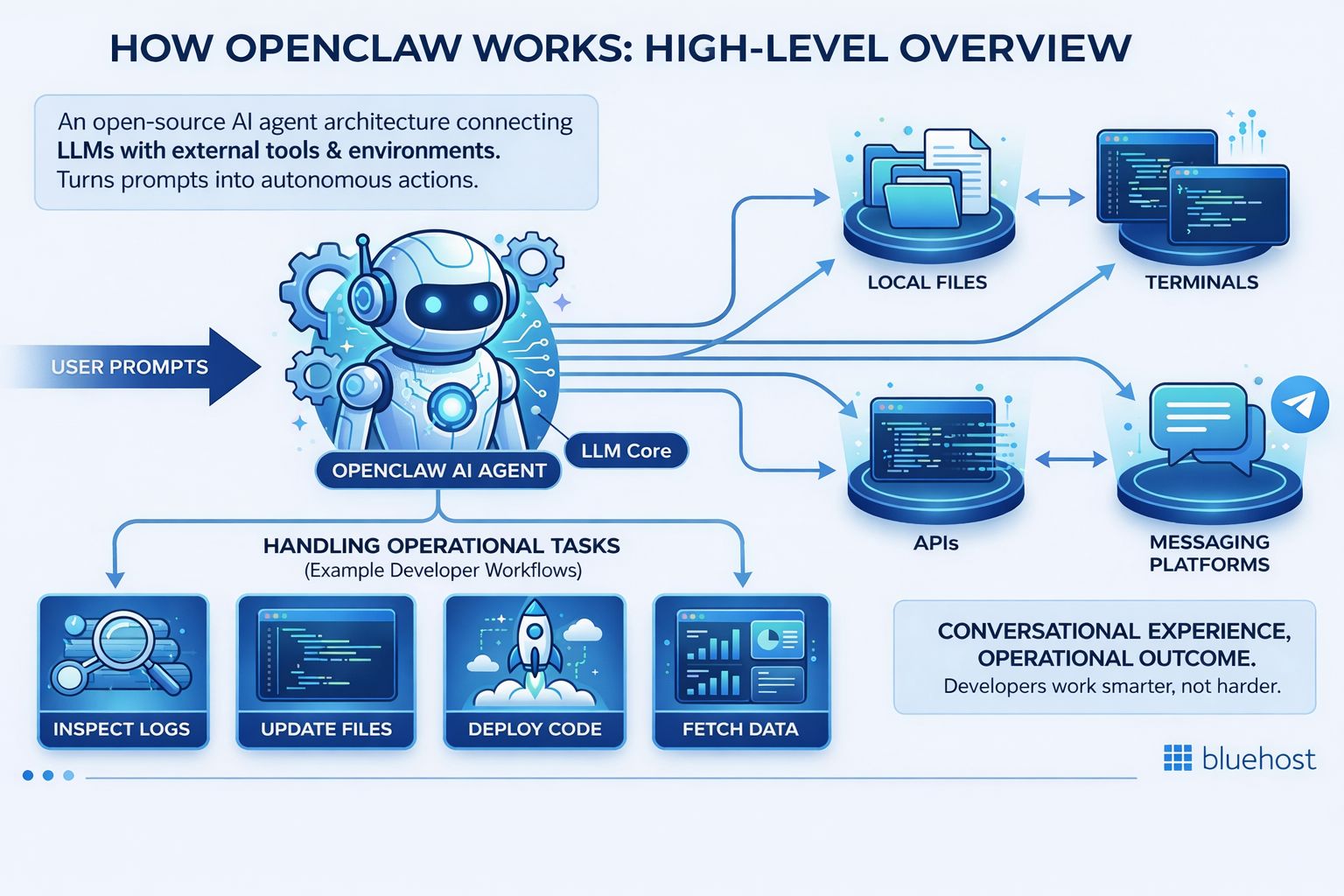
At its core, OpenClaw is an open-source personal AI assistant designed to execute tasks on behalf of its user. Its tagline suggests a focus on action: "The AI that actually does things." This implies functionality beyond answering questions.
OpenClaw is presented as capable of automating personal and professional tasks. Its described capabilities include:
Inbox Management: Assisting with inbox organization.
Communication Automation: Potentially sending emails and managing correspondence.
Calendar Coordination: Helping with scheduling appointments and agenda management.
FAQs
What is OpenClaw and what makes it different from traditional AI?
OpenClaw is an open-source personal AI assistant designed to actively execute tasks on behalf of users, rather than just processing information or responding to direct commands. Its focus is on automation of actions like inbox management, communication, and scheduling.
What are the key capabilities of OpenClaw?
OpenClaw's described capabilities include assisting with inbox organization, automating communication (like sending emails), coordinating calendars, and potentially helping with travel logistics. It aims to integrate with messaging platforms for interaction.
How does OpenClaw relate to the trend of autonomous AI agents?
OpenClaw exemplifies the trend towards more autonomous AI agents. It moves beyond reactive AI by being able to receive a goal and then independently devise and execute the necessary steps to achieve it, potentially across different applications.
How does Nonilion leverage concepts similar to OpenClaw in its AI office vision?
Nonilion envisions an AI office where individual AI agents, like the task-executing capabilities seen in OpenClaw, are scaled and orchestrated to facilitate team-level collaboration. This involves creating a virtual workspace where humans and AI agents interact to coordinate efforts, manage projects, and optimize workflows for collective intelligence.
What are the potential benefits of AI agents like OpenClaw for individuals and teams?
For individuals, OpenClaw offers potential for increased productivity by automating personal and professional tasks. For teams, the underlying concept can lead to streamlined onboarding, automated meeting follow-ups, and better cross-platform project management, ultimately enhancing overall efficiency and collaboration.
Travel Logistics: Potentially assisting with travel arrangements.
OpenClaw's design emphasizes accessibility. It is described as integrating with messaging platforms like WhatsApp, Telegram, and Discord, allowing interaction through chat interfaces. Its design also includes the option to run on local devices, which can be relevant for users prioritizing privacy and data control.
Why OpenClaw Matters: The Trend Towards Autonomous AI Agents
OpenClaw's emergence reflects a trend in AI: the development of more autonomous agents. AI has often been reactive, responding to explicit prompts. OpenClaw is presented as embodying an agentic approach where an AI can be given a goal and then devise and execute steps to achieve it, potentially across applications and platforms.
This trend is significant for several reasons:
Potential for Increased Productivity: By automating tasks, individuals may be able to focus on other work.
Enhanced Accessibility: Integrating AI into communication channels can make capabilities accessible to a broader audience.
Personalized Automation: The ability to learn and adapt to user preferences could allow for personalized automation.
Data Privacy and Control: Local execution options address concerns about data security and user control over information.
The success of individual agents like OpenClaw also raises questions about scaling these capabilities to team and organizational levels. While OpenClaw may empower the individual, the potential of AI may lie in orchestrating collective action and fostering collaboration. This aligns with the vision for an AI office, such as the one being developed at Nonilion, enabling human + AI collaboration.
How OpenClaw Paves the Way for AI-Augmented Workflows
OpenClaw's functionality illustrates how AI agents can be integrated into work. The concept of a "Skill Workshop" suggests a future where individual AI actions can be modularized and reused, potentially creating a library of automatable tasks. This modularity could be key to building more complex AI-driven workflows.
Consider potential team implications:
Streamlined Onboarding: AI agents could potentially automate aspects of new team member setup.
Automated Meeting Follow-ups: AI agents might assist with transcribing meetings, summarizing decisions, and creating tasks.
Cross-Platform Project Management: AI agents could potentially monitor project progress across different tools and provide consolidated updates.
The focus on discrete tasks highlights a demand for AI that can perform actions. This demand may be a foundation for building more sophisticated collaborative AI systems.
The capabilities associated with OpenClaw can be seen as foundational for what we at Nonilion envision as the future AI office. While OpenClaw may focus on personal task automation, the potential of AI in the workplace may lie in fostering human + AI collaboration within an intelligent environment.
An AI office aims to elevate the concept of autonomous agents to a team and organizational level. Instead of just clearing an individual's inbox, AI agents within a workspace could be designed to:
Coordinate Team Efforts: Work together to manage projects, potentially ensuring tasks are completed efficiently.
Facilitate Remote Collaboration: Provide a shared virtual workspace where humans and AI agents interact, potentially bridging geographical distances.
Optimize Meeting Workflows: AI agents might assist with gathering documents, identifying action items, and ensuring follow-through.
Enable Async Execution: This could allow team members to contribute without needing to be online simultaneously.
OpenClaw's focus on personal tasks may be a starting point. The vision for an AI office involves creating a virtual office where intelligent agents can operate in concert with human team members, driving collective intelligence and productivity. It's about moving from individual AI assistants to a cohesive, AI-augmented team environment.
When and Where Will We See More of This? The Future of AI in Work
The trend towards actionable AI agents is ongoing, and its integration into the workplace is expected to grow. OpenClaw's focus on automating personal tasks may indicate a broader direction.
When: The adoption of AI agents is likely to continue growing. As AI models become more capable, the range of tasks they can perform may expand. AI assistants may handle increasingly complex workflows.
Where: The "where" is evolving from individual devices and chat apps to integrated digital workspaces. Platforms are emerging to create a dedicated AI office environment, providing infrastructure for agents to interact with human colleagues, manage shared workflows, and contribute to team objectives. The focus may shift from isolated task completion to integrated team performance, enabling better team coordination and workflow automation.
The progression from personal AI assistants to integrated AI offices is a natural development. It involves harnessing the power of individual AI agents and orchestrating them within a collaborative framework to enhance efficiency and innovation.
Conclusion: The Collaborative Intelligence Era
OpenClaw represents a development in AI agents that can perform actions, highlighting a demand for tools that can automate tasks and enhance personal productivity. The broader impact may come from extending this capability beyond individual users to teams and organizations.
At this platform, the development of an AI office is underway, where humans and AI agents may collaborate within a shared virtual workspace. This environment aims to facilitate async execution, optimize meeting follow-ups, and enhance team coordination, potentially transforming how distributed teams operate. OpenClaw may illustrate what individual AI agents can achieve; the focus is on building an ecosystem where these agents, and others, can work together to achieve collective goals, contributing to an era of collaborative intelligence.
This trend matters to Nonilion because it points to a bigger change: teams are moving from simple calls toward persistent, AI-supported collaboration spaces. Nonilion can bridge live presence, meeting context, avatars, and follow-up work so the trend becomes a usable workflow instead of a headline.
Shareable Extracts
The trend is not just "openclaw: What Developers Need to Know" - it is a signal that team coordination is becoming the next competitive edge.
Hot take: the teams that win from this shift will not be the ones with more meetings; they will be the ones with clearer shared context after every meeting.
If openclaw: what developers need to know keeps moving this fast, remote teams need a workspace where conversation, presence, and follow-up stay connected.
OpenClaw: Actionable AI Agents and the Future of Collaborative Workspaces The promise of artificial intelligence has long been that of an assistant, a tool to augment human capabilities.
While early AI focused on information retrieval and pattern recognition, a new wave is emerging: AI agents that don't just process data, but actively do things.
Social Hooks
Everyone is talking about openclaw: What Developers Need to Know. The overlooked part is what happens to team workflows after the headline fades.
The uncomfortable question behind openclaw: What Developers Need to Know: are teams adapting their collaboration systems fast enough?
This is not a meeting trend. It is a coordination trend, and products like Nonilion sit right in the middle of that shift.